
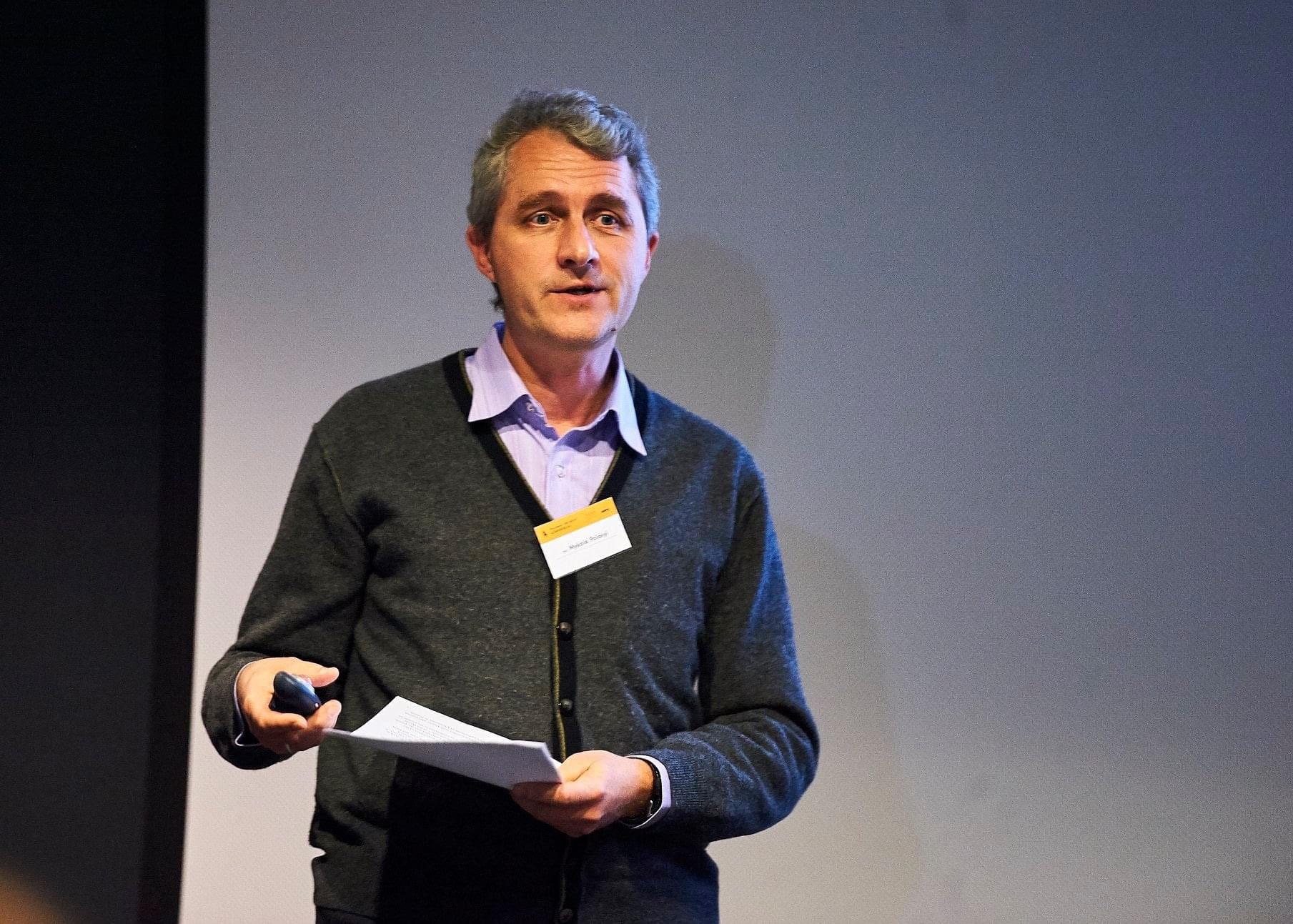
Today, we have as our guest a fascinating person, one of the most well-known political scientists in Ukraine and beyond, Doctor of Political Science, Professor Mykola Polovyi.
Recently, the whole world was shocked by the shooting of people in the Russian shopping and entertainment centre Crocus. However, perhaps even more shocking was the reaction of the Russian security forces, which I cannot call “law enforcement”, when Russian security forces cut off a suspect’s ear on camera, a video of which was deliberately disseminated through all possible channels.
Subsequently, Russian propagandists began to openly and publicly say that the Russian security forces “had the right to do so” because, as one of the mouthpieces of the criminal Putin regime, Margarita Simonyan, noted: “It wasn’t warm oatmeal that [the terrorists] were supposed to be fed“.
Therefore, the focus of our anti-torture platform is on the latest developments, the issue of terrorism in general, and therefore the reactions of state agents to acts of terror in the current environment.
I would like to emphasise that the answer to whether the security forces can use torture in such cases is obvious and clear in advance. Therefore, the main question is why, in the XXI century, when the absolute prohibition of torture is supposedly clear to everyone, we are witnessing what we could have seen in the events at Crocus.


D.Y.: From time to time, after another terrorist act, the population of the country concerned demands decisive measures against terrorists and approves the use of torture, allegedly “to save the nation“. What did the events in Crocus add to the agenda of terrorism prevention policy? Or, speaking about the essence of the phenomenon, rather than the number of manifestations of such a phenomenon, did they add anything at all?
M.P.: There is no doubt about the permanent relevance of the problem of terrorism in the modern world. One of the main characteristics of this phenomenon today is its gradual expansion in quantitative and, to some extent, qualitative terms.
Indeed, terrorism is becoming more diverse, involving more and more countries and social groups. Terrorist tactics, while retaining their main features, are also evolving towards more complexity and diversity. At the same time, the number of measures to counter this phenomenon is increasing. At first glance, it even seems that over the past 50 years, there has been a positive correlation between the number of international and national (in different countries) counter-terrorism measures and the number and social danger of terrorist acts.
However, speaking about Crocus, firstly, let us once again formulate a clear answer to what terrorism actually is.
Terrorism is understood as a form of organised violence. Moreover, the concept of “violence” in this case is understood in a rather limited way: as a threat or use of force to inflict physical harm on an individual or a group of individuals (as opposed to using this term in a broader sense as deprivation of liberty and human rights violations).
Secondly, terrorism is the use of force for political purposes, i.e. it is a specific form of political violence. Terrorism is not based on any violence (although violence is its main and essential weapon), but on its programmatic attitudes. What makes a terrorist act political is its motive and focus.
Thirdly, terrorism combines a high level of political motivation with a low level of mass participation, which distinguishes it from national liberation movements, revolutions, and other mass political movements.
Fourthly, a terrorist act, in addition to causing direct harm to the victim, is designed to have an effect: to sow fear, to create a threat to a wide range of people, i.e. to terrorise. An act of violence is considered terrorist if its psychological effect is inversely proportional to its true physical results.
That is why a terrorist act is by no means exhausted by an assassination attempt, and does not end with the end of a military operation. Its main significance is not just in eliminating individuals, causing large-scale material damage, etc., but in achieving social resonance, for example, by intimidating governments, certain social groups or entire nations. An act of physical violence (or the threat of such violence) is made terrorist by its goal of influencing the authorities.
One often hears something about “political terrorism“. However, the irony of this phrase is that “political terrorism” is a tautology. All terrorism is political; otherwise it ceases to be terrorism.
The generally recognised reasons for the rise of terrorism in the modern world are mentioned in almost every work on the subject and are well known.
These include, for example, crisis processes that are characteristic of modern development: the historical experience of the century with wars and state terror; the negative effects of the scientific and technological revolution: sharp structural shifts that intensify migration and marginalisation processes, exacerbated environmental and demographic problems, an “information explosion”, a sharp breakdown of traditional stereotypes and social guidelines; the cult of violence, and the neglect of human rights; the threat of nuclear war and environmental disaster, leading to pessimism, constant anxiety, fear and anger, devaluation of human life, psychological permissiveness; the emergence of global interdependence of socio-economic, political and ideological processes; the growing desire to free human natural instincts from the norms and requirements of civilisation that limit them.
Another group of prerequisites is based on the revolutionary processes of the modern era and national liberation movements, on which left-wing terrorism is based.
D.Y.: Why did terrorism flourish in the XXI century?
M.P.: The parallelism in time of the emergence and development of terrorism and democracy can be considered proven. The main essential feature of well-known modern terrorism is the intimidation of the population to exert some influence on political authorities.
Let us analyse in which of the three known types of political regimes – totalitarian, authoritarian or democratic – such political practice makes sense and has prospects of effectiveness (in a purely pragmatic sense from the point of view of the perpetrator of such actions).
Can we expect a terrorist act to be successful in an authoritarian regime? For example, if the train bombings with human casualties, artificially carried out to intimidate the population, had taken place during the Russian autocracy before 1917, followed by demands to the Emperor, say, to introduce a constitution or at least political freedoms. Perhaps the population would have heard the emperor’s condolences to the relatives of the victims, but it is unlikely that they would have waited for the changes sought by the terrorists.
Thus, the goal of illegal, criminal (from the law’s perspective) influence on political power was attempted to be achieved by intimidating the holders of this power. The low effectiveness of such attempts is also known (not in terms of the number or “quality” of victims, but rather in terms of the degree to which the authorities considered the political demands of the terrorists).
To call the well-known Narodovoltsy, for example, terrorists is only a tribute to a certain historiographical tradition because their actions were quite far from the invariant features of modern terrorism (although they coincide with them in terms of political goals and a high degree of political motivation, along with a low degree of mass participation).
In fact, it is difficult to imagine any authoritarian regime, which by definition is indifferent to civil society and the extra-political life of the people, being too concerned about any threats of physical harm to the population. Moreover, it is impossible to imagine a regime that would fulfil the demands of terrorists under the pressure of such threats or their implementation.
D.Y.: What about the example of a totalitarian regime?
M.P.: A totalitarian regime, for example, of the Stalinist type, is more difficult to imagine as being inferior to terrorists: it generally does not spare the population, and given the usual disregard for human rights, a terrorist will face a swift and inevitable execution, which is difficult to compare with, for example, the Norwegian authorities’ overly tactful treatment of Breivik.
If we add to this the almost ideological snitching and the atmosphere of total suspicion, in which a future terrorist will be caught almost before he begins to think about a terrorist attack, it becomes clear that both the futility of preparing terrorist attacks and the zero political effectiveness of their implementation under a totalitarian regime are clear.
It should be recalled that the known isolated attempts of internal political struggle against a totalitarian regime were quite logically personified in the figure of the leader, such as the military mutiny in Germany in 1944.
D.Y.: It is logical to move to a democratic regime, isn’t it?
M.P: Exactly. And here it should be noted that, on the contrary, a democratic regime has several features that are extremely attractive for committing a terrorist act: 1) human rights enshrined in the Constitution of almost every democratic state, which allow a future terrorist to fight for his life, or even his freedom, after he is seized by the authorities (the example of Breivik in Norway is more than illustrative); 2) the source of power enshrined in the same Basic Law is the people.
Thus, in a genuine democratic regime, the situation for those wishing to intimidate political power and gain some benefit from it changes dramatically compared to an authoritarian regime: while in an authoritarian regime, such a person should intimidate the holder of power – the authoritarian leader, in a democratic regime, he or she has to intimidate the holder of power – the people.
This makes it quite logical to inflict physical harm (or threaten to do so) on relatively random victims – the more random they are, the more people will identify with them and feel anxious or afraid.
On the contrary, intimidation by physical violence against political leaders (or the perpetration of such violence) in a democratic regime loses all meaning – the indifference and fickleness of the population towards their even favourite politicians may already be a proverbial saying.

D.Y.: So, relatively speaking, “real” terrorism is a sign of a democratic regime.
M.P.: Yes. Only a democratic political regime creates all the necessary conditions for attempts to achieve political goals by people who are dissatisfied with the legitimate means of political action through modern-type terrorist acts.
Moreover, among the currently known extra-legal means of political influence, this method can be considered the most effective, as demonstrated by the events in Spain in 2004: under pressure from a population frightened by terrorist attacks, the democratically elected government had no other way to remain in power but to meet the demands of the terrorists.
At the same time, it would be an oversimplification to assume that only international scoundrels, taking advantage of these vulnerabilities of real democracies, are trying to achieve their nefarious goals through terrorism. A critical condition for planning any terrorist act is, so to speak, an educational component: to plan an action that will result in the fulfilment of my demands by political authorities, I must know who holds this power – in the simplest case, the people or an authoritarian leader.
Thus, it is quite logical to assume that planning (in the strategic sense) of terrorist actions can only be carried out by people with a real “democratic education” – people who have been taught in colleges and universities that the source of power in a given country is the people (or, if you don’t know who has the power, read the Constitution).
A separate problem is posed by actions that are extremely similar to terrorism in their manifestations – car and house bombings in Iraq, certain territories of Palestine, the North Caucasus, etc. In fact, only the lazy do not call it terrorism.
However, one important thing to note is that most of these acts are carried out against military, police, or administrative targets, which means that we are dealing with selectivity that is not typical of true terrorism (which is, at the same time, typical of ordinary guerrilla warfare or guerrilla warfare, or acts of revenge).
It is clear that, for example, the US military in Iraq found it more convenient to call local resistance fighters terrorists, which immediately put them outside the favour of the whole world. We can recall that the Nazis also called partisans and fighters of the European Resistance terrorists.
Indeed, the tactics of guerrilla warfare against a well-armed and trained army are in many ways similar to terrorist acts, but is it real terrorism? In our opinion, the answer must be no.
D.Y.: How does this manifest itself in the current Russian regime?
M.P.: It is impossible to ignore the issue of imitations of terrorism, which have been frequent in the post-Soviet space, where Russia is, unfortunately, the most striking example.
The high-profile terrorist attacks in Russia in 1999, when two houses in residential areas of Moscow were bombed, left the population of almost the entire country extremely intimidated and actually happy to support the start of the second Chechen war, which Putin believed to be victorious.
While all the formal signs of a terrorist act are present, the main thing missing here is democracy, which is the only reason for such actions according to the scheme described above: intimidation of the population – intimidated population puts pressure on the political authorities – political leadership, which obeys the source of power, complies with the demands.
Therefore, these acts were not terrorist acts, but only their imitation.
And the point is not how much evidence Felshtinsky and Litvinenko knew about the FSB’s involvement in these bombings, but rather the impossibility of setting a goal of influencing the authorities by intimidating the people in authoritarian Russia.
We consider the 2008 and 2011 bombings in Minsk to be similar imitations of terrorist acts – the motives and goals of the organisers of these bombings can be interpreted in different ways, but there is no doubt that in authoritarian Belarus, effective terrorist acts, again in the political sense, are impossible.
Before we talk about Crocus, let us recall that modern Russia is also aware of numerous “small-scale” “terrorist acts” compared to the one mentioned above – the bombings of shahids in the Moscow metro, the Domodedovo shahid, etc.
With all the grief for those who died, we have to admit that the actual bombings without further political demands are not terrorism. Let us recall how it sounds in reports of bombings that seem to be terrorist attacks in any country: “…so far, no organisation has claimed responsibility for this attack“.
Moreover, in Russia, it has become commonplace to spend months searching for an organisation that will “claim responsibility” or be declared responsible, which in light of the above, is not the same thing. Unfortunately for Russian citizens, such “terrorist attacks” are mostly artificial imitations.
D.Y.: And finally, Crocus?
M.P.: I have every reason to believe that the attack in Crocus was nothing more than an imitation of a terrorist act. It did not contain any demands on the authorities, while “real” terrorism is inconceivable without an attempt to influence the authorities.
Terrorists from the Islamic State “woke up” only almost two days later to claim their involvement in the massacre at the Crocus. However, the extensive and strong ties between the Russian special services and the Islamic State have already become anecdotal, and therefore even such a statement can only be considered inspiration.
Even if we conditionally assume that this massacre was indeed carried out by representatives of the Islamic State, even they have not made any demands on the Putin regime.
Therefore, it can be reasonably argued that the so-called “Crocus attack” was nothing more than a planned imitation action aimed at cementing the population within the Putin regime.


D.Y.: I would like to return to the beginning of our discussion, and most importantly, to the problem of formulating and implementing national and international policies to combat torture. In the case of Crocus, the problem was by no means limited to the cementing of the Russian population around the Kremlin dictator.
M.P.: Right. Russia is essentially and by nature a terrorist state. Unfortunately, as the events in Ukraine after 24 February 2024 have demonstrated, this is neither a declaration nor an exaggeration.
However, with the example of Crocus, the terrorism of the Russian state has reached a new level: we have seen how the Russian population not only supports Russian security forces in cutting off the ears of suspects. After Crocus, the Russian population “swallowed” torture as a normal form of behaviour of security forces towards the population itself.


 Dmytro Yagunov